

Emotional Anesthesia Disguised as Wisdom
What our favorite sentences are really doing


This piece was sparked by a line I read recently:

“Who cares? We’re all going to die anyways.”
Not as agreement.
But as a place to pause.
There are sentences that quietly run our lives. Not the dramatic ones. Not the ones we argue about or defend passionately. The small, familiar ones we repeat without noticing what they’re doing for us.
You live only once.

As long as there’s health.

Who cares, we’re all going to die anyway.
You don’t say them to be careless. You say them because they work. They arrive at the exact moment when something tightens inside you and offer relief before you have to stay with it. They smooth the edge. They close the gap. They help you move on.
If you’ve read pieces like “You live only once” or “As long as there’s health,” you already know the territory I keep circling. Not to mock these sentences. Not to prove them wrong. But to slow them down long enough to see what they actually carry.
This isn’t about semantics. And it isn’t about being right.
It’s about how easily human thinking bends when phrases start doing emotional labour for us quietly, efficiently, without us ever stopping to ask what they’re replacing.
I read a lot.
About different things. About how AI will ruin us. About how everything is collapsing. About how we’re losing something essential. And then, on the other side, about how everything can be fixed, how technology makes things easier, faster, lighter. How all you have to do is decide, start, take action. It doesn’t have to be perfect. Just do something.
Both sides speak with certainty.
I don’t believe anything will destroy a human being except the human being himself. Not technology. Not systems. Not time. What wears us down is quieter than that.
I see many people on Substack writing about movement. About decisions. About courage. About choosing differently. And I understand why those texts resonate. They offer direction. They promise relief through action.
This piece wasn’t written to argue with that.
It was sparked by a sentence I read, and by the strange familiarity of it. By how easily it fit into themes I’ve been circling for a long time, not as ideas, but as lived territory. What you’re about to read isn’t really a step forward. If anything, it’s a step inward. Or maybe downward. A closer look at what happens before action, before decision, before the language that tells us we’re being wise.
Because sometimes what looks like clarity is just anaesthesia. And sometimes what sounds like wisdom is doing the quiet work of keeping us from staying with something a few seconds longer.
That’s where this begins.
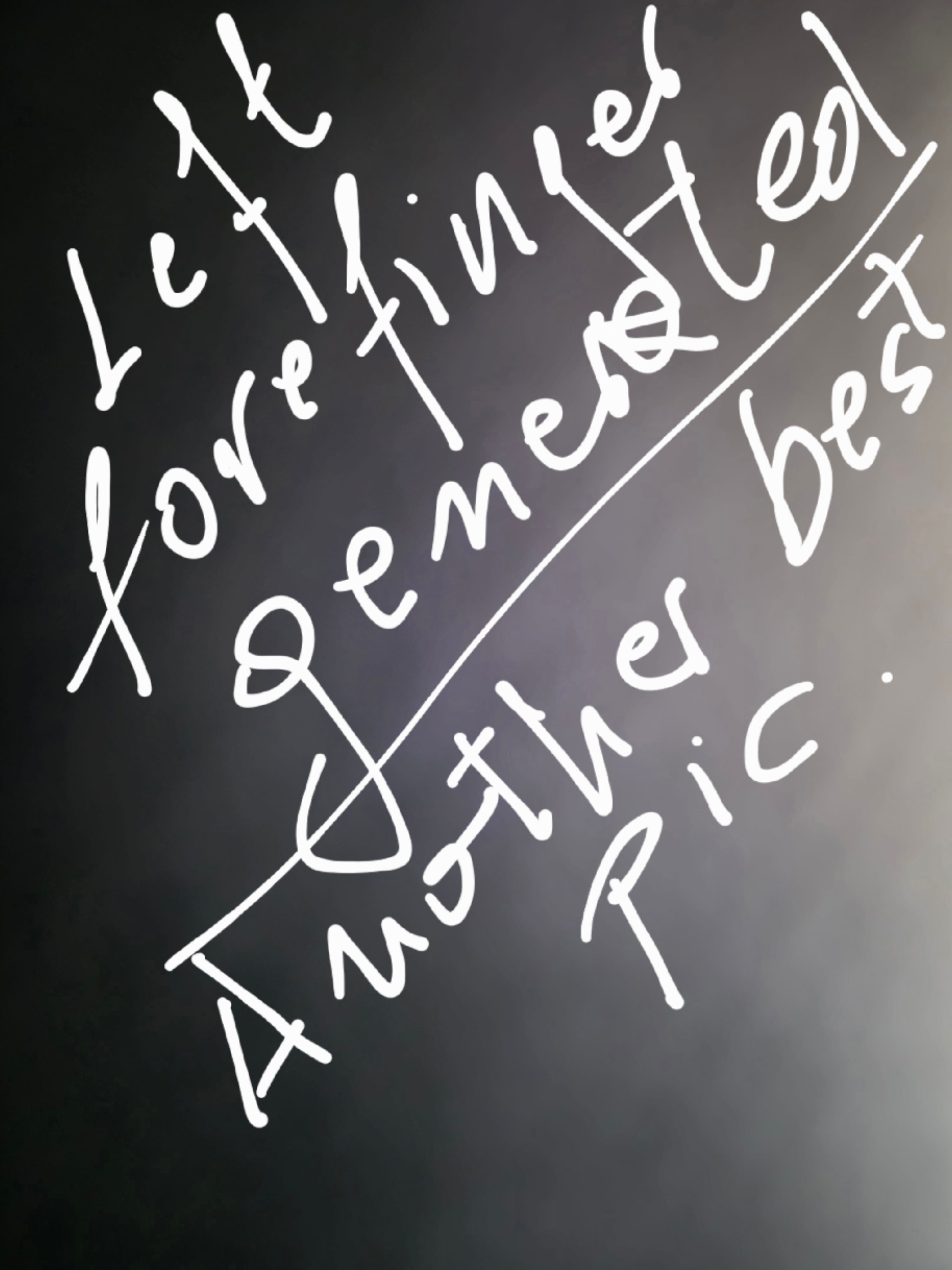
Please, stay awake
There is no sentence to replace the old ones.
Nothing new to hold on to. No wiser phrasing. No cleaner conclusion. That would only repeat the same gesture in a different costume. What remains instead is simpler, and less comfortable.
There is a life before the sentence. And there is a life after it.
But in between, there is a moment most people never stay with long enough to recognise. A moment without language, without justification, without relief. A moment where nothing has been resolved yet, and nothing has been anesthetized. That moment doesn’t promise clarity. It doesn’t offer comfort. It doesn’t reward you for staying.
It simply exists.
And staying with it, even briefly, changes the texture of things. Not because you act differently right away, but because the shortcut is no longer invisible. The sentence may still appear. You may still say it. But it won’t land the same way.
Not because it’s wrong.
But because you’ve felt what it was covering.
Some sentences don’t ruin your life.
They just make it easier not to feel it.
And once you’ve seen that, staying awake becomes quieter than effort, and heavier than wisdom.
Nothing more is required here.
Just that you don’t rush to fill the space that has opened.
Why do these sentences exist?
These sentences didn’t appear by accident.
They weren’t invented to excuse carelessness or to justify avoidance. They didn’t come from laziness, or from a lack of depth. They came from moments when something became too heavy to carry all the way through.
People didn’t start saying you only live once because life felt light. They said it when life felt narrow. When options closed faster than expected. When staying with the full weight of a decision felt unbearable.
’As long as there’s health’ didn’t come from optimism. It came from loss. From watching things fall apart in ways that couldn’t be fixed, and needing a sentence that would keep the body standing when nothing else could.
’Who cares, we’re all going to die anyway’ isn’t nihilism in its original form. It’s relief. A way to loosen the grip of a moment that feels too tight to stay inside without some kind of release.
These sentences work because they meet real human limits.
They arrive when fear is present but unnamed. When grief hasn’t found its language yet. When responsibility feels heavier than choice. They offer something immediate and practical: a way out of the pressure without having to confront it directly.
That doesn’t make them lies.
It makes them sedatives.
They reduce intensity. They soften edges. They help the nervous system settle just enough to continue. And in many moments, that function matters. Without it, some people wouldn’t get through the day.
This is why mocking these phrases never works. And why arguing against them misses the point. They didn’t arise from ignorance. They arose from necessity.
“Life is what happens while you’re making plans for it.” - John Lennon
There is something deeply human in reaching for language when the body needs relief. In letting a familiar sentence carry the weight for a moment when you can’t.
The problem doesn’t begin with the sentence itself.
It begins later when the sentence stops being a support and quietly becomes a substitute.
For choice.
For contact.
For staying with what’s actually happening.
That shift is subtle enough to go unnoticed. And because the sentence sounds wise, reasonable, even compassionate, it rarely gets questioned.
At this point, the reader still feels safe.
Nothing has been taken away yet.
That’s exactly where the next fracture opens.
What happens when a sentence takes on the function of a decision?
At some point, the sentence stops arriving after the moment. It starts arriving before it. It shows up before the question finishes forming. Before the body has time to register what it’s reacting to. Before there’s space for anything else to appear.
The sentence is already there, waiting.
Not as a reflection. As a switch.
You feel the tightening first, a brief contraction, a subtle hesitation, a moment where something asks to be felt more fully. And almost immediately, the phrase moves in. Smooth. Familiar. Effective.
You only live once.
Who cares.
As long as there’s health.
The relief is instant. The edge softens. The pressure lowers just enough to keep moving. The moment doesn’t expand; it closes.
What matters here isn’t that the sentence is spoken. It’s that, once it is, nothing else follows. No further question. No pause. No unfinished sensation asking for attention.
The phrase doesn’t answer the moment. It replaces it.
It bypasses the small internal sequence that would normally take place, the brief uncertainty, the bodily signal, the unfinished thought. That sequence never completes. The sentence steps in and resolves it early.
This is where the fracture begins.
Not because something false was said, but because something true was never allowed to finish forming. The sentence skips the part where the body might have caught up with what the mind was already trying to outrun.
After that, there’s nothing left to examine. The moment is technically closed. You can move on with a sense of having handled it, even though nothing was actually handled.
That’s why these phrases feel so efficient. They don’t demand anything further. They don’t ask you to stay. They don’t create consequences you’d have to live with.
They leave no loose ends.
And because of that, they slowly take over a function they were never meant to have: they become the place where thinking stops. Not out of ignorance, but out of relief.
The unease doesn’t disappear. It just doesn’t get language. It settles somewhere else, waiting for the next moment where the sentence will be needed again.
This is where the discomfort first becomes noticeable, not sharp enough to alarm, not clear enough to name. Just a faint sense that something keeps getting resolved too quickly.
That’s all for now.
The next layer sits underneath this in the body, before language has a chance to arrive at all.
Don’t you see the difference?
There is a difference between mental relief and bodily quiet.
They often get mistaken for the same thing.
The sentence calms the mind quickly. It gives shape to what would otherwise stay open. Thoughts settle. The internal noise lowers. From the inside, it can feel like resolution. But the body doesn’t always follow.
The shoulders stay slightly raised.
The breath doesn’t deepen.
The jaw remains set, even after the reasoning is finished.
This is easy to miss, because attention has already moved on. The sentence did its job. The moment appears handled. There’s no obvious reason to stay. But if the decision were truly aligned, the body wouldn’t need convincing. It wouldn’t need repetition. It wouldn’t need reinforcement the next time a similar moment appears.
When something is right, it settles without argument.
What happens instead is subtler. The mind feels lighter, while the body stays alert. Not alarmed. Just unfinished. As if it’s waiting for a part of the process that never arrived.
This is where confusion begins.
People start trusting the sentence more than the sensation. They learn to prioritize clarity in thought over quiet in the body. If the reasoning sounds solid, the lingering tension gets dismissed as irrelevant or oversensitive.
But the body isn’t reacting to the logic.
It’s reacting to what was skipped.
There was a moment, brief, unformed where something wanted attention before the sentence arrived. A sensation without words. A hesitation without a story. That moment didn’t get space.
Language moved faster.
And once language leads, the body follows only partially. Enough to function. Not enough to rest.
This is why the same sentences have to be repeated. Why they return in similar situations. Why the relief they offer doesn’t last. The mind remembers the shortcut. The body remembers the missing step.
Nothing here feels dramatic. There’s no inner alarm. Just a pattern of small closures that don’t fully close.
The body notices this long before the person does.
It carries the residue quietly, waiting for a moment when the sentence won’t arrive fast enough when there will finally be time to feel what was postponed.
That moment is the one most people avoid.
And it leads directly into the space they learn to escape.
The space we all avoid
There is a brief moment before the sentence appears.
It’s easy to miss because it doesn’t announce itself. It doesn’t feel like insight or fear or anything you could point to. It feels more like a gap, a pause where meaning hasn’t arrived yet.
This is the space most people never stay inside.
It’s the second before you say it’s fine.
Before who cares shows up.
Before you only live once smooths the edge.
In that second, there is no plan.
No justification.
No narrative to hold on to.
Just sensation.
The body registers something, but it hasn’t been translated yet. There’s a tightening, a hesitation, a quiet pull that hasn’t decided what it is asking for. It doesn’t know how to argue its case. It doesn’t even know its own name.
This is why the sentence arrives so quickly.
Language fills the space before it can widen. It restores orientation. It gives the mind something solid to stand on. And with that, the discomfort loses its chance to unfold.
Staying here feels unproductive.
Exposed.
Inefficient.
Nothing gets resolved in this space. That’s precisely why it’s avoided. There’s no relief waiting on the other side of it. No answer you can carry forward. Just the experience of not knowing yet.
For a few seconds, you are without position.
This is the moment where many people feel an urge to stop reading. Not because anything is wrong, but because the text isn’t offering traction. It isn’t moving toward a conclusion. It isn’t helping.
It’s doing something more threatening: it’s slowing you down.
In this space, you can’t claim wisdom. You can’t lean on perspective. You can’t reduce the moment to something manageable. You have to stay present without the protection of meaning.
Most people learn very early that this is uncomfortable enough to avoid.
So they don’t linger. They reach for the sentence. They let it close the gap. They move on with the relief intact.
What remains unseen is that this space. Unresolved, unnamed, unfinished, where something else would have formed if it had been given time.
Not a solution.
Not an answer.
Just a deeper contact with what is actually there, before it gets anesthetized into something easier to carry.
And because this space keeps getting bypassed, it becomes unfamiliar. Even threatening. Something to be escaped rather than entered.
The sentence protects against that.
And the cost of that protection doesn’t show up immediately.
What are these sentences actually hiding from us so that we don’t see?
The sentences don’t free you from anything.
They postpone the meeting.
They don’t remove the weight. They shift it forward, out of sight, into a later moment that hasn’t arrived yet. The relief they offer is real, but it’s temporary. It works the way anaesthesia works: by interrupting sensation, not by changing what caused it.
Who cares doesn’t mean nothing matters.
It usually means I can’t stay with this right now.
You only live once doesn’t open life.
It closes the moment that asked for attention before the slogan arrived.
These phrases protect you from something specific: the full contact of the moment you’re standing in. Not because that moment is unbearable, but because it would require you to stay a little longer than you know how to.
The relief comes quickly. Almost kindly.
The cost doesn’t.
Because the cost isn’t felt in the moment. It’s felt in repetition.
You notice it later, when the same sentence appears again. When it’s needed more often. When it has to be said louder, or with more conviction, to achieve the same effect. When it stops sounding like perspective and starts sounding rehearsed.
This isn’t cynicism.
It’s self-care that has gone too far.
At first, the sentence helps you survive.
Then it helps you avoid.
Eventually, it helps you not notice what keeps returning.
That’s how false relief works. It doesn’t break anything. It just delays the encounter long enough for the pattern to repeat without being questioned.
And repetition has a way of revealing things that single moments can’t.
If the sentence truly liberated you, it wouldn’t need to come back.
It wouldn’t need reinforcement.
It wouldn’t need to be repeated every time the same pressure appears.
The moment when a sentence no longer works
Think of the last time the sentence stepped in.
Not in a crisis. Not when everything was falling apart. In a small moment. Ordinary.
Easily forgettable. A moment where something could have continued. And didn’t.
The sentence arrived smoothly. It did what it always does. It closed the space and allowed you to move on. Nothing broke. Nothing demanded repair.
And that’s the problem.
This isn’t about what you should have done instead. It’s about what was avoided. Not the action. The interruption. These sentences don’t end situations. They end processes.
They stop something before it has time to become uncomfortable enough to matter. And because they work, they get reused. Not consciously. Reliably.
That’s how repetition forms.
Not because the choice was wrong but because it never finished.
“You can’t cross the sea merely by standing and staring at the water.”
— Rabindranath Tagore
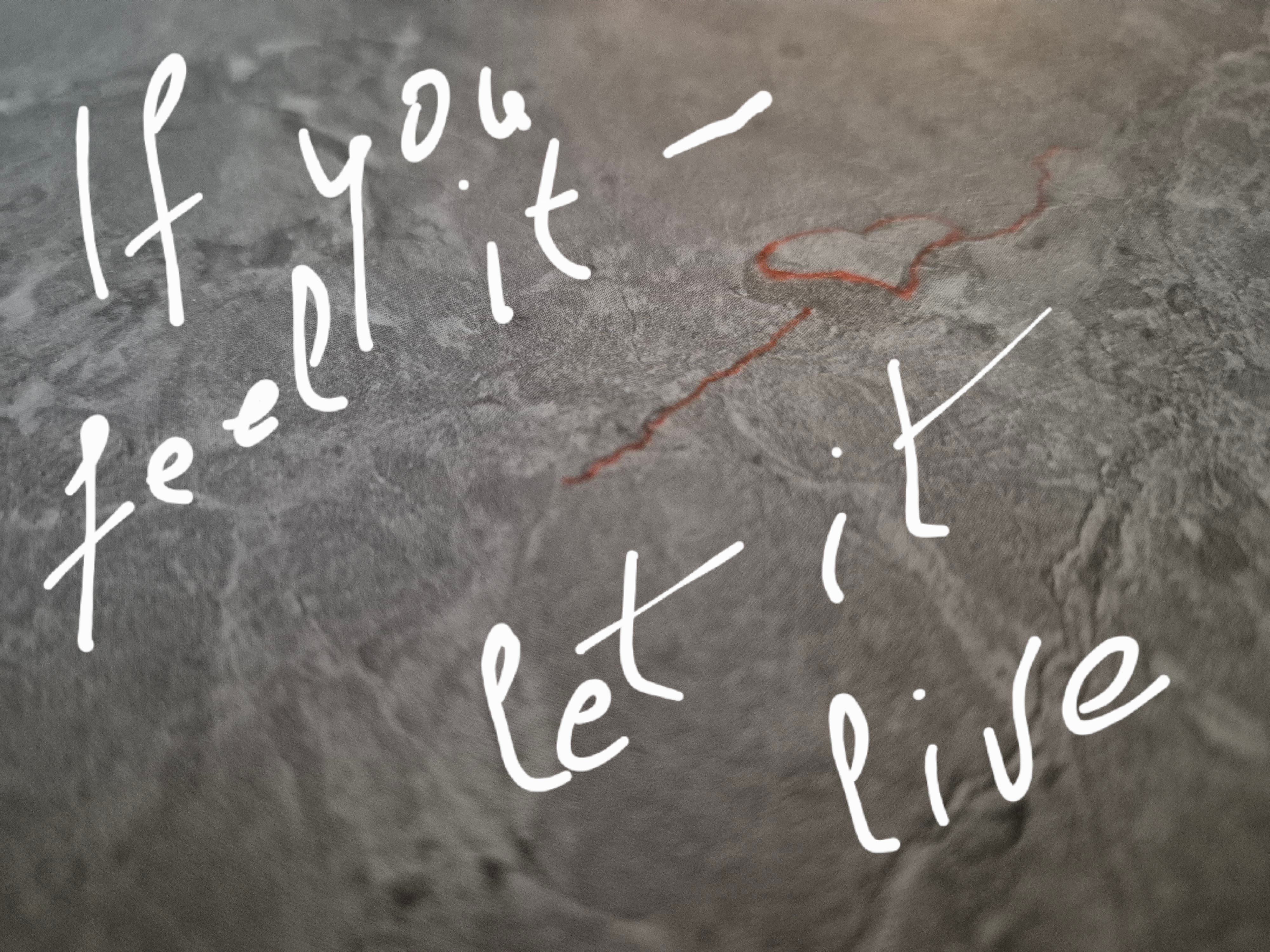
Nothing needs to be concluded here.
The sentence didn’t save you.
It postponed you.
And postponement, repeated often enough, starts to look like freedom until you notice how often it has to be said.
Real freedom doesn’t need rehearsal. It doesn’t arrive with a slogan. It doesn’t show up only when something feels too tight to stay with.
Anything that needs constant justification isn’t liberating you. It’s managing something. Freedom doesn’t need to be defended every time you choose it.
If this is freedom, why does it need to be repeated?
Double ID
I really liked how you described the concept of problem avoidance. Just one phrase that softens everything, but doesn't solve the problem, only deepens it. Perhaps this is what escapism is all about.
Thank you for such a wonderful piece; it helped me understand that I should trust my body much more.
I had to stop reading twice—not because I disagreed, but because my nervous system registered what you were naming before my mind could catch up. That gap you describe, the one before language arrives to smooth everything over, is precisely where the body holds what we've been trained to bypass. What struck me most is how this piece doesn't offer a new sentence to replace the old ones—it refuses the same gesture it's critiquing. You've created something rare: writing that slows the reader down exactly when we're conditioned to speed up, making the postponement itself visible. This isn't about becoming better at staying with discomfort; it's about recognizing how skillfully we've learned to leave before anything completes. Brilliant!