

I wrote 47 Notes. None moved.
Nothing was wrong with them. That was the problem.


I didn’t notice it at first. That’s the uncomfortable part.
I was writing consistently. Showing up, publishing, thinking through every sentence before I hit post. These weren’t rushed ideas or empty thoughts I believed in what I was writing. It felt clear. It felt honest. It felt like the kind of writing that should connect.
And for a moment, it looked like it did.
A few likes would come in. Sometimes a comment. Just enough to create the impression that something had landed. Just enough to keep me going. I told myself the same thing most writers do, consistency compounds, give it time, keep showing up.
So I did.
I wrote more. And more. Dozens of Notes. Then more than I could easily count without scrolling back. Each one carrying the same quiet expectation: this one might be the one that actually moves.
But something didn’t sit right.
Because nothing ever really continued.
No conversation that carried forward. No moment where someone stayed inside the idea longer than a reaction. No shift I could point to and say that changed something for them. The post would exist for a few hours, maybe a day, and then it would dissolve into everything else. Not rejected. Not criticised. Just… gone.
And that’s when I started to realise something I hadn’t wanted to admit.
It wasn’t that my writing was being ignored. It was that it was being consumed. And then forgotten.
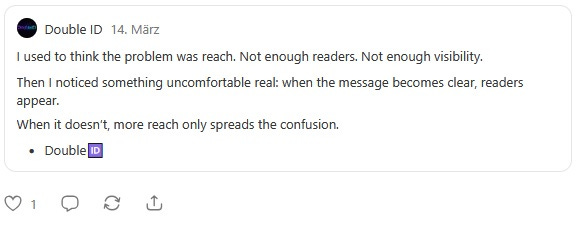
At first glance, that kind of response feels fine. Even encouraging. But if you look at it long enough, a different question starts to form. One that’s harder to sit with.
If people read what you write… why does nothing happen after?
It took me longer than I’d like to admit to see it clearly.
At first, I treated each post as its own outcome. If one didn’t move, I assumed the next one might. Different idea, different angle, better phrasing, something would eventually click. That’s how most writers think. You don’t question the system. You adjust the output.
But the more I wrote, the harder it became to ignore what was happening underneath.
The response didn’t change. Not really.
It didn’t matter how “true” the idea felt, how clean the sentence was, or how much thought I put into shaping it. The pattern stayed the same: people read, reacted lightly, and moved on. No carryover. No accumulation. No sense that anything was building.
And that’s when the shift happened. Not in the writing. In how I looked at it. Because this wasn’t random anymore. It was consistent.
Which meant it wasn’t the audience. It wasn’t the timing. And it definitely wasn’t “just part of the process.” It was something I was doing.
Something subtle enough to go unnoticed. But consistent enough to train the people reading me.
Many writers are accidentally training their readers to ignore them.
Not intentionally. Not obviously. But repeatedly. Every post that ends where it started teaches the reader that nothing will happen after they finish reading. No shift. No continuation. No reason to stay inside the idea longer than it takes to scroll past it.
And once that expectation is set, it becomes invisible.
People don’t decide to leave.
They just don’t feel a reason to stay.
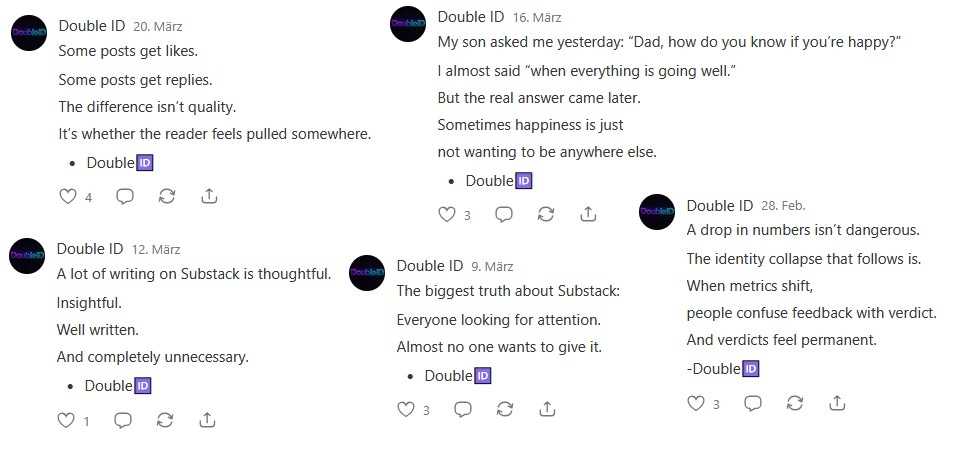
That was the part I couldn’t ignore anymore. It wasn’t that my writing wasn’t being seen. It was being seen the same way, every single time. That realization forced a different kind of honesty. Because once you stop blaming reach, timing, or the algorithm, there’s only one place left to look. The writing itself. Not whether it’s good. What it’s actually doing.
That’s where things start to get uncomfortable.
Because most of what I had written was, objectively, solid. The ideas made sense. The sentences were clear. There was nothing confusing or sloppy about it. If anything, it was the kind of writing people would describe as “thoughtful.”
And that’s exactly why it kept failing.
It was complete.
Every post said what it wanted to say. It opened, developed the idea, and closed it cleanly. There were no loose ends, no friction, nothing left hanging. The reader could understand it, agree with it, and move on without carrying anything forward.
It felt finished.
And that was the problem.
Because nothing in it required anything from the reader. No tension, no discomfort, no moment where they had to stop and reconsider something they already believed. It didn’t interrupt anything. It didn’t challenge anything. It simply presented something that made sense and allowed the reader to leave exactly as they arrived.
It was clear. It was smart.
It was safe.
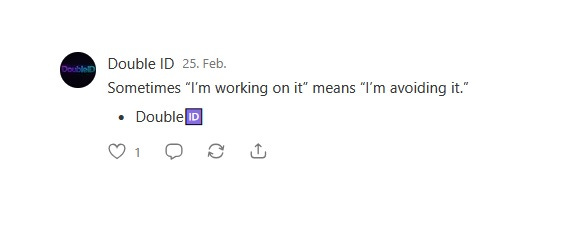
And safe writing has a very predictable outcome. It gets read. It gets appreciated. And then it disappears without leaving a trace. That’s when the question changed. Up until then, I had been asking something that felt completely reasonable.
Is this good?
Is this clear?
Does this make sense?
Is this worth sharing?
Every answer pointed in the same direction. Yes.
And yet, nothing was happening. So I stopped asking about the quality of the writing. And started asking about the effect. Not what the post says. What it does. Because those are not the same thing.
A piece of writing can be clear, structured, and even insightful and still leave the reader untouched. It can deliver an idea perfectly and create nothing beyond the moment it’s read.
That’s when I realised I wasn’t writing to move anyone. I was writing to be understood. And that difference changes everything. Because writing that aims to be understood closes itself as soon as the idea is delivered. It resolves, it explains, it finishes. There’s nothing left to hold onto. But writing that moves the reader behaves differently.
It creates tension.
It interrupts something.
It leaves a trace that doesn’t resolve immediately.
It doesn’t just give the reader something to understand.
It gives them something to carry.
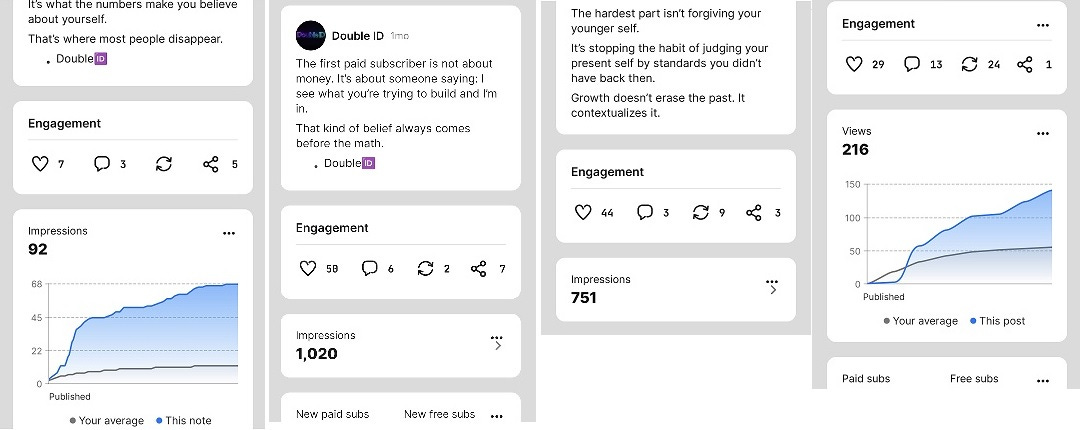
And that’s where the pattern finally broke. Not when the writing got better. When it stopped trying to be complete. Once you see it, you can’t go back to the way you were writing before. Because the problem was never that the writing failed.
It’s that it didn’t risk anything. Nothing in it could go wrong. Nothing in it could be rejected. Nothing in it could create resistance. And without that, nothing could move. That’s the part most people don’t want to admit.
Safe writing doesn’t fail.
It disappears.
It gets read, maybe appreciated, sometimes even saved but it leaves no pressure behind it. No reason to respond. No reason to return. No reason to remember it once the next post appears.
It asks nothing from the reader. And because it asks nothing, it receives nothing. That’s why it’s so easy to keep doing it. It feels productive. It feels correct. It even feels valuable. Until you look at what happens after.
Because if nothing changes for the reader, not how they think, not what they question, not what they feel, then the writing hasn’t actually done anything. It has just passed through them. And once that becomes clear, a different question starts to matter. Not “was this good”?
But why would anyone come back to this?
That’s where everything started to shift for me. Not in what I write. In what I expect my writing to do. Because once you stop thinking in terms of content, everything changes. You no longer measure a piece by how well it explains something, or how complete it feels when you finish it. Those things stop being enough.
The only thing that starts to matter is this: what happens after someone reads it?
Does something stay with them?
Does something continue?
Or does it end the moment they scroll past it?
I’m still working this out in real time.
Not as a theory, but as something I’m testing every time I write now. Changing small things. Leaving more unsaid. Allowing more tension to exist instead of resolving it immediately.
Because at this point, it feels obvious.
The problem was never the content.
It was what my writing wasn’t doing.
And once you see that, it becomes very difficult to keep writing the same way.
Double ID


For someone who had to find my own way, my own answers my entire life, I do the same thing. I resolve everything within a note.
Holding back felt wrong until I realized I’m not helping people at all when I answer the questions for them. I’m learning to write differently now.
Love that thought. I've been also moving in that direction. Not saying everything, allowing the reader to shape their own thought, it feels risky at the beginning. But it's so worth it.